Author and historian connecting America’s past to the forces shaping our Republic today. Evidence-driven essays on history, civics, democracy, and public life for readers who believe understanding the past is essential to protecting the future.
The Last Test of Power
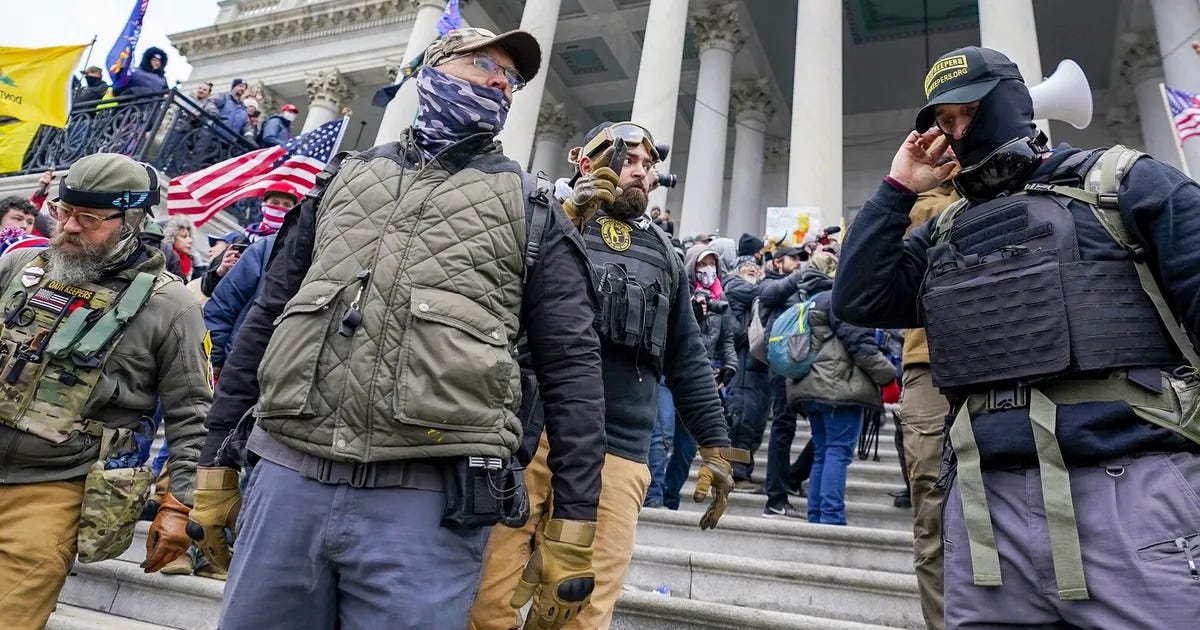
“Having now finished the work assigned me, I retire from the great theatre of Action.” Dear Friends, Let me take you on a brief journey to Annapolis, Maryland, into an afternoon that might reveal more about the spirit of our Republic than almost any battlefield from the Revolution. It was December 23, 1783. The war had ended, and the British had officially recognized American independence. That day, George Washington arrived at the Maryland State House dressed in his Continental Army uniform. Congress was seated before him, and behind him stretched nearly eight years of struggle… Valley Forge, Yorktown, the loss of thousands of Americans, and a level of personal fame that’s hard for us to fully imagine today. I sincerely believed Washington had every reason to believe he had become the essential figure in America’s journey. Then, all of a sudden, he gave it all back. Washington stood before Congress, gently setting aside the military commission he had accepted back in 1775. He kindly returned it to the civilian government from which his authority had originally come. He shared with the delegates that his work was now complete, and with a respectful bow, he quietly stepped away. This act wasn’t mandated by any constitutional rule, nor was it guided by a longstanding American tradition, since the nation was still in its infancy and an American Republic had never been established before. Washington simply understood something fundamental… something that would become a core part of the political values the Founders aimed to build: Power entrusted to you isn’t the same as power belonging to you. What makes that afternoon even more remarkable is that Washington had already been tested. In May 1782, Colonel Lewis Nicola wrote to him as the army grew increasingly frustrated with an ineffective Congress, unpaid wages, and a government that seemed barely capable of governing. Nicola suggested that Republican government might be too weak and that Washington could provide the country with something stronger. He even ventured toward the word Americans had fought a war to escape: king. Washington’s response was immediate and unmistakable. He told Nicola that no development during the war had caused him greater pain and ordered him to banish the idea. Less than a year later, an even more dangerous moment came at Newburgh, New York. Washington’s officers were angry, and with good reason. Congress had failed to pay them properly, promises about pensions remained uncertain, and anonymous appeals circulated suggesting that the army should use its leverage against the civilian government. These weren’t ordinary citizens writing angry letters. They were armed officers commanding the country’s only national military force. Had they chosen to make Congress obey them, the American experiment might have ended before our Constitution was even written. Washington met with them on March 15, 1783, appealing to their sense of honor and reminding them of the sacrifices made to build what they had fought for. Then, in a touching moment that many Americans learn about in school, Washington asked for forgiveness as he reached for his spectacles, explaining that his years of service had left him not only gray but nearly blind. The officers, having endured many battles, were moved to tears. The situation calmed down not because Washington had more power, but because they trusted him… someone who showed time and again that he was committed to serving the nation, not himself. I think we sometimes look at our Founding Fathers and immediately think of the regal portraits, monuments, quotations, and marble faces on currency, and, in doing so, we miss the difficult political problem they were actually confronting. They knew that Republics had existed before America, and those same Republics had collapsed before America came into existence. Washington, Franklin, Madison, Adams, Hamilton, and Jefferson disagreed bitterly about what the new nation should become, but none of them believed liberty could survive merely because someone had written beautiful words on parchment. The Constitution they eventually produced mattered enormously, but so did the habits surrounding it. Elections had to be accepted, and civilian authority had to command the military. But, moreover, presidents had to understand that they were merely occupying the office rather than owning it. Political opponents couldn’t automatically become enemies of the state. Most importantly, men entrusted with power had to recognize that someone else would one day hold it. Therefore, no constitutional Republic survives for long when its leaders begin to treat that transfer as an injustice rather than the normal rhythm of self-government. Upgrade to Open Society Paid Membership Washington demonstrated the point again after serving as our first President. Nothing in the original Constitution limited him to two terms. He could’ve sought another term, and many Americans would have gladly supported him. Instead, he went home. Once again, the country’s most famous man surrendered public authority and became a private citizen. His example proved so powerful that American presidents followed the two-term tradition for nearly a century and a half before it was finally written into our Constitution following Franklin Delano Roosevelt’s record-breaking 4th term. After his presidency, the 22nd Amendment, ratified in 1951, limited presidents to being elected no more than twice. That history feels especially uncomfortable now because our politics increasingly rewards precisely the opposite instinct. Donald J. Trump refused to accept his defeat in 2020, spent years insisting that the election he lost had been stolen, and returned to office with a political movement built to an extraordinary degree on loyalty to him personally. We have watched public officials measured by their willingness to defend the leader, institutions attacked when they resist him, and political defeat described not as an ordinary possibility in a Republic but as inherently suspect when it produces the wrong result. This situation is even bigger than Donald J. Trump, because the temptation for such power doesn’t just go away when he steps down. Throughout history, successful leaders have often faced voices telling them that the country needs them more than ever, that the usual rules aren’t enough in dangerous times, and that their opponents just can’t be trusted. They’re told that history somehow gives them a special pass to act freely. Lewis Nicola shared a similar warning with Washington back in 1782, and Washington knew exactly what that path could lead to. Maybe that’s why the scene at Annapolis still resonates with me. Washington didn’t relinquish his commission for lack of ambition, strength, or confidence. Instead, he did so out of a deep understanding of their limits. The Revolution wasn’t about choosing which American would carry forward George III’s authority… It was about making sure that true power would come from the people, rising upward, rather than from a ruler descending from above. Washington’s example gave the young Republic something the Constitution could not produce on its own: a leader willing to accept defeat, relinquish authority, and return power without forcing the country to pry it from his hands. For most of our history, we treated that willingness almost as part of the constitutional structure. January 6th exposed the weakness in that assumption. A Republic cannot ultimately depend on the character of the person who loses an election… The peaceful transfer of power is too important to rest on custom, decency, or a president’s decision to behave like George Washington. Congress recognized part of that vulnerability after 2021. The Electoral Count Reform Act now makes clear that the Vice President’s role in counting electoral votes is purely ministerial, sharply limits congressional objections, and creates clearer procedures for resolving disputes over state certifications. The Twentieth Amendment already tells us something even more basic: a president’s term ends at noon on January 20, whether he wishes to leave or not… Those protections matter. But January 6th also left harder constitutional questions that ordinary legislation cannot permanently settle. What mechanism should exist when an officeholder sworn to support the Constitution is accused of participating in an insurrection? How should presidential immunity apply when conduct aimed at overturning an election is alleged? And should the basic rules governing certification and the transfer of presidential power remain statutory, vulnerable to future congressional revision, or be placed beyond ordinary politics in the Constitution itself? That’s where George Washington the man stops being a sentimental story and becomes useful to us. His restraint became a precedent because Americans were fortunate enough to begin with a man who understood that losing power could be as important as gaining it… We shouldn’t assume we’ll always be that fortunate. Washington set the precedent, but our generation has learned that precedent alone is insufficient. The Founders never expected their work to remain frozen in 1787. Article V was their acknowledgment that experience would reveal dangers they couldn’t foresee and that later Americans would sometimes need to repair the constitutional structure they inherited. They deliberately made that process difficult because changes of this magnitude should never belong to one president, one party, or one political moment. It took Donald J. Trump’s effort to overturn the 2020 election and the shock of the January 6th insurrection to expose just how vulnerable the peaceful transfer of power could become when a president refused to accept the limits that generations before him had honored. That’s the lesson we cannot afford to waste. Our constitutional system should never again depend on the temperament, restraint, or sense of duty of the person occupying the White House. Our first president set the standard for presidential behavior; January 6th was the exact opposite of what our Founders expected. Yet if they were alive to witness insurrectionists climbing the walls of our Capitol, they wouldn’t have been surprised, because they fully anticipated the dangerous power of factions to our Republic. Now the responsibility falls to us to strengthen the rules and guardrails so thoroughly that no future president, however ambitious, reckless, or willing to dog-whistle to armed militias, can again place the peaceful transfer of power, and with it our Republic, at the mercy of one person’s will. Vivat Constitution! P.S. If this piece gave you something worth carrying beyond the page, kindly consider sharing it and subscribing to the Open Society, either for free or as a paid member; cancel anytime. Paid members help sustain the independent research behind this work and keep these stories of history, civics, and our Republic free and available to everyone. |
L.C. Francis Open Society for History & Civics
Author and historian connecting America’s past to the forces shaping our Republic today. Evidence-driven essays on history, civics, democracy, and public life for readers who believe understanding the past is essential to protecting the future.
“I then thought, and still think, that it was an effort of genius.”— George Washington, 1785 Dear Friends, Exactly 250 years ago this week, a man named Sergeant Ezra Lee climbed into a wooden oak vessel barely larger than a walnut shell, secured the brass hatch above him, and slipped beneath the dark tidal waters of New York Harbor. Above him, the Royal Navy loomed. Ezra Lee’s expedition followed Washington’s army, which had suffered a devastating defeat on Long Island; Manhattan was in...
“Security against foreign danger is one of the primitive objects of civil society.”— James Madison, Federalist No. 41 Dear Friends, By the time most of us enjoy our first cup of coffee this Sunday morning, roughly 1.7 million voters in the eastern German state of Saxony-Anhalt will already be casting their ballots in an election that could tell us a great deal about Europe’s future. As many of us learned in our history classes, Germany’s post-Nazi reintroduction to the international community...
“Power must never be trusted without a check.”—John Adams to Thomas Jefferson, 1816 Dear Friends, If you’ve ever crossed Arlington Memorial Bridge from Washington, you know the view, even if you’ve never thought much about why it feels different from the rest of the city. Behind you sits Abraham Lincoln. Ahead lies Arlington National Cemetery, with Arlington House above it. The open line between them was deliberately created, connecting the president who preserved our Union with ground that...