Author and historian connecting America’s past to the forces shaping our Republic today. Evidence-driven essays on history, civics, democracy, and public life for readers who believe understanding the past is essential to protecting the future.
A Labor Day Reckoning
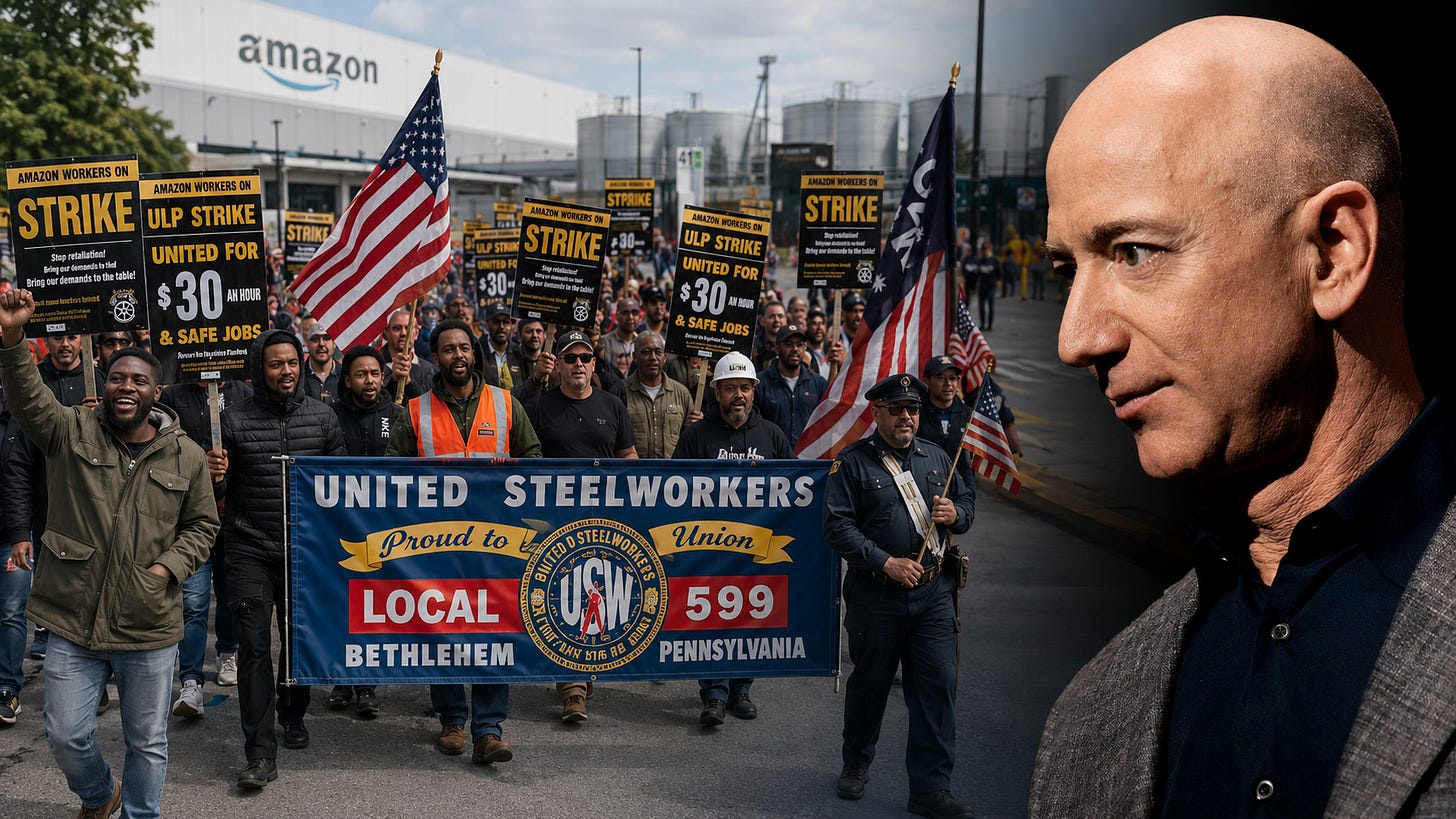
“The most common and durable source of factions, has been the various and unequal distribution of property.” Dear Friends, Before the cookouts start and the politicians give their yearly nod to the value of hard work, I’d love to introduce you to two remarkable American workers. Though they never met and lived 132 years apart, their stories together teach us so much more about Labor Day than most of what we’ll hear this coming Monday. Jennie Curtis was a young seamstress working in George Pullman’s company town near Chicago. Before the economic downturn in 1893, skilled women in her department could earn up to $2.25 a day sewing carpets, curtains, and luxurious fabrics for Pullman’s renowned sleeping cars. Unfortunately, Pullman kept reducing wages, and Jennie later recalled that ‘The most experienced of us could only make 80 cents per day,” with many women earning just 40 or 50 cents. Although the wages had decreased, the company’s rents remained unchanged. Jennie’s father had worked for Pullman for thirteen years before sadly passing away with around $60 in back rent. Jennie was asked to settle this debt using her already limited earnings. By the time the strike started, she had managed to pay off most of it. She was busy sewing luxurious interiors for railroad cars meant for passengers who could afford to sleep between cities, all while working hard to pay her late father’s rent to the same company that employed both of them. Jennie finally took action, just like so many workers have done before her. She stepped up by organizing efforts, becoming president of a women’s local union, and standing with others in a strike that grew across our entire national rail system. Our federal government didn’t remain neutral between workers and corporations. President Grover Cleveland’s administration obtained an injunction, sent federal troops into Chicago, jailed union leader Eugene Debs, and helped crush the strike. Our own Department of Labor’s history describes what finally defeated the strike as “the armed might of the government.” Here’s the irony worth carrying into Labor Day. Cleveland signed the law making Labor Day a federal holiday on June 28, 1894, as the Pullman conflict was erupting, and within days our government was using troops against the labor movement the new holiday was supposed to honor. We’ve made the holiday prettier since then, turning struggle into a three-day weekend and union banners into mattress sales, but the argument beneath it never went away. This morning, outside BP’s huge refinery in Whiting, Indiana, Don Skalka is very familiar with the scene. Having spent twenty years as an operations specialist at a refinery that can process 440,000 barrels of oil each day, he loved the work so much that his son and daughter were inspired to follow in his footsteps and work at the same place. Since March, Don and around 800 union workers have been unable to enter their workplace due to a contract disagreement. His children have found lower-paying jobs at a nearby steel mill, and Don has been relying on donated groceries and union support. This ongoing conflict between BP and the United Steelworkers centers on key issues such as wages, staffing, automation, AI, and workers’ bargaining power as the refinery evolves. Don summed it up this week by saying, “The little guys have been taking hits.” That sentence highlights a significant change, as the economic power balance between American workers and the corporations that employ them has shifted dramatically. Back in 1983, 20.1% of our wage earners were union members. Last year, that number decreased to 10%, and in the private sector, only 5.9%. History shows that bargaining power truly holds economic value. In 2025, the median full-time union worker earned $1,404 a week, compared to $1,174 for the median nonunion worker… a $230 weekly difference, or nearly $12,000 a year. While the Bureau of Labor Statistics wisely notes that factors like occupation, location, industry, age, and company size explain part of this gap, almost $12,000 makes a real difference for families paying mortgages, buying groceries, or trying to save for the future. In fact, Gallup reported this week that 71% of Americans approve of labor unions, and a record 47% want unions to have more influence. Republicans are more complicated. A majority (52%) approve of unions, but only 19% want unions to gain greater influence. That distinction matters, but so does what the Republican administration in Washington has actually done. Last March, Donald J. Trump invoked a national security clause in federal labor law to exclude departments such as Defense and Veterans Affairs, as well as parts of Homeland Security and other agencies, from collective bargaining. This year, the Ninth Circuit lifted a preliminary injunction against that Executive Order, even though separate legal cases are still ongoing. Then, just last month, a federal judge again prevented the VA from canceling a union contract covering roughly 320,000 employees. The White House didn’t hide its reasoning. It described some federal unions as “hostile” and argued that collective bargaining interfered with the Oval Office occupant’s ability to manage our government. Reasonable people can debate inefficient work rules, the proper scope of presidential authority, and whether every federal position should have the same bargaining protections. But we shouldn’t confuse that debate with neutrality. When our government dismantles the machinery of collective bargaining, power doesn’t disappear… It moves to management. That brings us to Walmart and Amazon, where the imbalance between corporate wealth and working poverty becomes impossible to ignore. A new Government Accountability Office analysis found that 13.8 million working adults were enrolled in Medicaid in 2024, and 10.6 million were living in households receiving SNAP food assistance. About two-thirds worked at least 35 hours a week for part of the year, and 88% of wage earners participating in those programs worked in the private sector. Separate state data from September 2025 show Walmart and Amazon repeatedly among the large employers of people receiving those benefits. In Tennessee, GAO estimated that 3,513 Walmart workers and 3,101 Amazon workers were receiving SNAP benefits. In my home state of Georgia, 4,595 Walmart workers and 3,285 Amazon workers were enrolled in Medicaid. It’s important to look at these numbers with honesty and care. The data from 11 states involves employers that might not reflect the whole country. Walmart and Amazon are big players in employment, but whether someone qualifies for Medicaid or SNAP depends on various factors like income, family size, hours worked, and specific state regulations. The evidence doesn’t show that either company by itself made any worker need assistance. But intellectual honesty cuts both ways, and the numbers still tell us something important about who bears the cost of maintaining our workforce. Walmart reported $713.2 billion in revenue in its latest fiscal year, while the Walton family’s fortune is now estimated at roughly $520 billion. Amazon generated $716.9 billion in sales in 2025 and $77.7 billion in net income, while Jeff Bezos is worth about $268 billion. I don’t begrudge success, but I find it disgusting that such enormous fortunes can grow while thousands of the workers who helped create them still rely on Medicaid and SNAP. Quite shameful, but at some point, extraordinary wealth carries an extraordinary obligation to the people who helped make it possible. When the richest family in America is worth more than half a trillion dollars, while thousands of employees at the company that created that fortune appear in Medicaid and SNAP data, oligarchy ceases to be merely a political insult and becomes a serious question about economic power. From a purely historical angle, we are witnessing in real time a neo-Gilded Age where we pay for Medicaid and SNAP while corporations and their owners benefit from a tax system that has already delivered trillions in cuts. Then Washington turns around and cuts the very programs millions of working Americans use to buy food and see a doctor. Unfortunately, that’s the bargain we have created: private wealth at the top, public subsidy at the bottom, and the worker squeezed in between. Now follow the money one step further. The Republican reconciliation law passed last year is projected by the Congressional Budget Office to reduce federal revenues by about $4.9 trillion from 2026 through 2035, with more than 80% of that reduction stemming from provisions that permanently extended most of the expiring 2017 tax law. The same legislation is projected to reduce Medicaid spending by roughly $1.2 trillion and SNAP spending by $211 billion. CBO expects the Medicaid changes alone to reduce enrollment by 13.1 million by 2035. At the same time, our federal minimum wage remains $7.25 an hour, unchanged since July 2009. A person working forty hours a week for fifty-two weeks at that wage earns only $15,080 a year. Put those policies together, and a philosophy begins to emerge. We weaken organized labor, leave our federal wage floor frozen for 17 years, cut the programs millions of working Americans rely on for food and healthcare, and call that a free market, even as taxpayers continue to absorb part of the human cost when work doesn’t provide enough to sustain a household… Basically, risk decreases while reward increases. That isn’t a pristine market operating beyond politics. It’s a market structured by our tax and labor laws, public benefits, corporate rules, and political decisions, and those decisions help determine who enters the room with leverage and who enters it alone. James Madison recognized the underlying danger before our nation had factories. In Federalist No. 10, he warned that “the most common and durable source of factions” was the unequal distribution of property. Madison wasn’t writing a brief for modern unions, but he understood the dangers of concentrated power and the need for counterweights. Organized labor became one of those counterweights in industrial America. Unions didn’t abolish capitalism. At their best, they made capitalism bargainable. They gave ordinary Americans some leverage over wages, hours, safety, retirement, and the terms under which technology might replace their labor, helping build the broad middle class that politicians from both parties now tell us they want to restore. That’s why I was excited for you to meet Jennie Curtis and Don Skalka this morning. Jennie brought luxury into Pullman cars, even as the company was collecting her late father’s rent debt from wages that had already been cut. Don spent twenty years working inside one of America’s biggest refineries, and now he’s outside its gates, contemplating the future of his job, his children’s jobs, and the bargaining power of the people who run that plant. Although they lived in different centuries and worked in diverse industries, the timeless question remains the same: who should be rewarded when American enterprise thrives, and who should bear the burden when it faces change? On Monday, you’ll hear almost every politician across our country express their love for the American worker. But what truly matters is not just their words… It’s how they act when that worker asks for bargaining power, healthcare, wages that can cover groceries, and a real voice before an algorithm or corporate restructuring changes their life…This November, we’ll have our chance to judge those actions at the ballot box and decide who deserves to stay. Labor Day was never meant to be a ceremonial thank you to working people. It grew out of their demand to stand together in an economy where capital had already learned to do exactly that. If we’re serious about rebuilding our middle class, we cannot keep stripping workers of leverage while wealth and political power continue to concentrate above them. For nearly 250 years, Americans have understood that concentrated power, wherever it gathers, eventually demands a price from ordinary people. This Labor Day, perhaps the better tribute to our workers isn’t another speech thanking them, but an honest look at why so many can work full time and still struggle to buy groceries while fortunes above them rise into the hundreds of billions. That is not the American promise our parents and grandparents fought to preserve, and it should not be the inheritance we leave our children. Vivat Constitution! P.S. If this piece gave you something worth carrying beyond the page, kindly consider sharing it and subscribing to the Open Society, either for free or as a paid member; cancel anytime. Paid members help sustain the independent research behind this work and keep these stories of history, civics, and our Republic free and available to everyone. (https://lcfrancis.substack.com/subscribe) |
L.C. Francis Open Society for History & Civics
Author and historian connecting America’s past to the forces shaping our Republic today. Evidence-driven essays on history, civics, democracy, and public life for readers who believe understanding the past is essential to protecting the future.
“Having now finished the work assigned me, I retire from the great theatre of Action.”— George Washington, December 23, 1783 Dear Friends, Let me take you on a brief journey to Annapolis, Maryland, into an afternoon that might reveal more about the spirit of our Republic than almost any battlefield from the Revolution. It was December 23, 1783. The war had ended, and the British had officially recognized American independence. That day, George Washington arrived at the Maryland State House...
“I then thought, and still think, that it was an effort of genius.”— George Washington, 1785 Dear Friends, Exactly 250 years ago this week, a man named Sergeant Ezra Lee climbed into a wooden oak vessel barely larger than a walnut shell, secured the brass hatch above him, and slipped beneath the dark tidal waters of New York Harbor. Above him, the Royal Navy loomed. Ezra Lee’s expedition followed Washington’s army, which had suffered a devastating defeat on Long Island; Manhattan was in...
“Security against foreign danger is one of the primitive objects of civil society.”— James Madison, Federalist No. 41 Dear Friends, By the time most of us enjoy our first cup of coffee this Sunday morning, roughly 1.7 million voters in the eastern German state of Saxony-Anhalt will already be casting their ballots in an election that could tell us a great deal about Europe’s future. As many of us learned in our history classes, Germany’s post-Nazi reintroduction to the international community...