Author and historian connecting America’s past to the forces shaping our Republic today. Evidence-driven essays on history, civics, democracy, and public life for readers who believe understanding the past is essential to protecting the future.
The Line the Military Cannot Cross
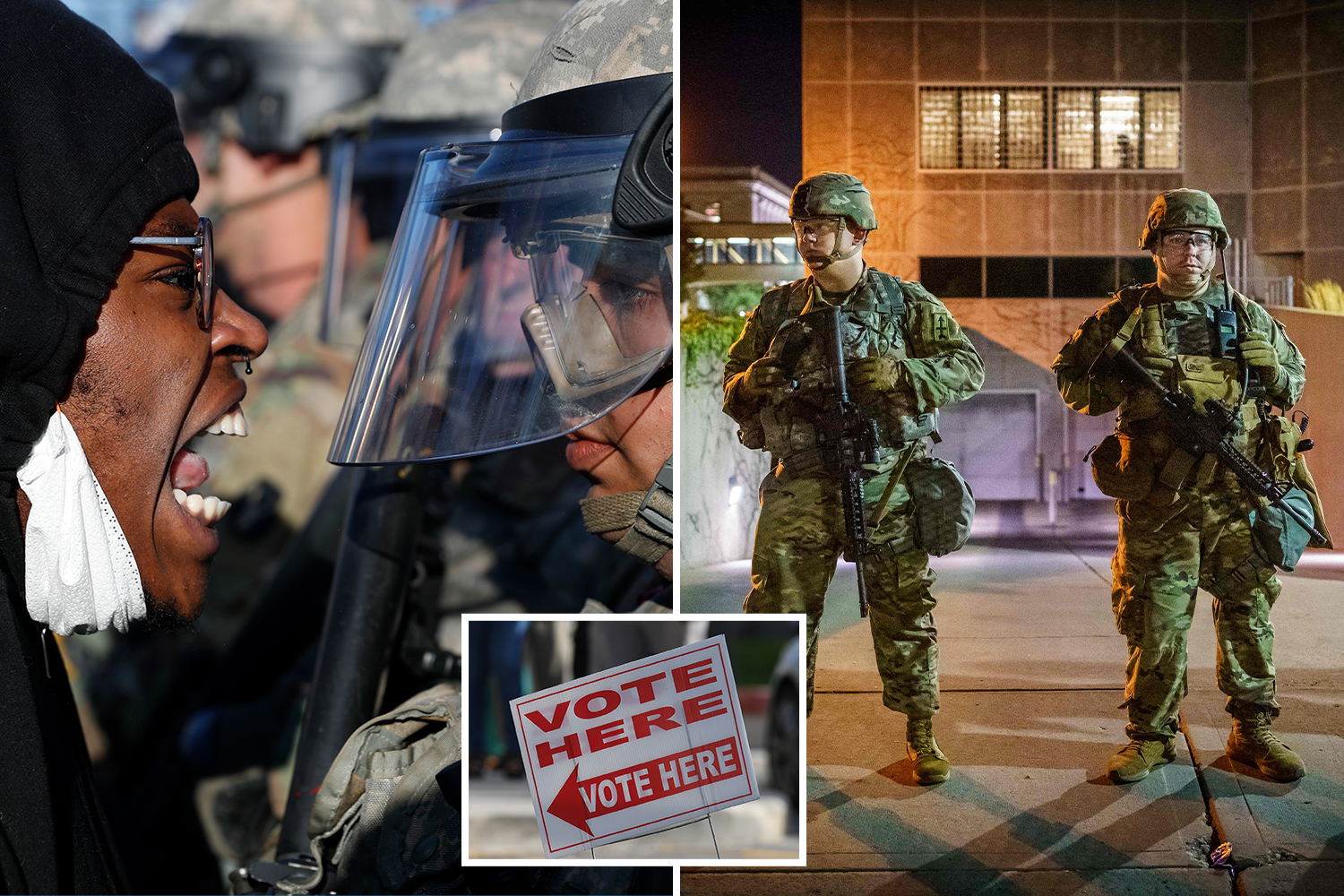
“By degrees, the people are brought to consider the soldiery not only as their protectors, but as their superiors.” Dear Friends, I was following the back-and-forth this week between members of the United States Senate and our civilian defense leadership when one exchange stopped me cold in my tracks. In a government built on checks, competing powers, and occasionally sharp political confrontation, Senators ask difficult questions of cabinet officials every day. That is part of the job. But there are some questions whose very necessity should concern us. On August 18, Senator Elissa Slotkin of Michigan asked Defense Secretary Pete Hegseth and Gen. Dan Caine, Chairman of the Joint Chiefs of Staff, to provide a remarkably basic assurance about the November midterms: Will the United States military stay away from American polling places? She also asked them to confirm that American troops would not be used to seize ballots, voting machines, or other election materials. I took a moment to go back, clear my ears, and replay that request twice, just to make sure I understood everything. Not because the question was complicated, but because in the United States of America, that question should never have needed to be asked. What really should concern us, however, is larger than just the possibility itself. A constitutional boundary, long regarded as settled by American law and military tradition, has become uncertain enough that a Senator now feels it’s necessary to put it into writing. We usually describe civilian control of the military as top-down: the President commands the Armed Forces, and generals answer to elected civilian authority. But a Republic contains an equally important relationship beneath that one. The President and Congress derive their authority from citizens. On Election Day, the voter stands upstream of the Commander-in-Chief. That is why military involvement in an election isn’t merely a matter of appearances. The institution with the government’s greatest coercive power cannot be permitted to influence the civilian process that determines who will command that power next. Congress understood this long ago. Title 18 of the United States Code contains a criminal statute with an almost startlingly plain title: “Troops at polls.” Section 592 prohibits federal officials from ordering, bringing, or keeping troops or armed men at an election site, except when necessary to repel armed enemies of the United States. Violating it can result in up to 5 years in prison and disqualification from federal office. The very next statute goes further. Section 593 prohibits members of the Armed Forces from intimidating voters, interfering with election officials, imposing election regulations, or attempting to determine who is qualified to vote. Congress did not merely instruct soldiers to remain impartial at polling places…It erected a legal wall between military power and the ballot box. That wall is built on a strong foundation. The federal prohibition dates back to 1865, when the Civil War forced Americans to confront military authority on a scale the Republic had never experienced. More importantly, Reconstruction then exposed the problem in all its complexity. Federal troops sometimes provided the only meaningful protection newly enfranchised Black citizens had against organized violence, including Ku Klux Klan terrorism intended to drive them from the polls. The military’s presence, in other words, safeguarded liberty for Blacks all across the South following the Civil War. 25% off to Upgrade to Paid by Midterms But Americans also confronted an uncomfortable truth: the same armed power capable of protecting a ballot could intimidate it if placed in different hands or used for a different purpose. The disputed Hayes-Tilden presidential election of 1876 brought that tension directly into national politics. Competing governments in Southern states claimed legitimacy while federal troops remained part of the political landscape. Congress argued bitterly over where legitimate federal protection ended and political intervention began. Two years later, the Posse Comitatus Act restricted the Army’s use in ordinary civilian law enforcement. Then, in 1879, President Rutherford B. Hayes, whose presidency stemmed from that disputed election, stated the principle plainly: “Any military interference whatever at the polls” was contrary to the spirit of American institutions and threatened the freedom of elections. The lesson went beyond just Reconstruction. Many of you have heard me say on many occasions that our polling places are among the few places in American life where rank disappears. The billionaire, the general, the President, and the eighteen-year-old casting their first ballot each have precisely one vote. For those few minutes, the hierarchy of government yields to political equality. Place federal forces alongside that process, and the relationship changes, even if no weapon is raised and no order is spoken. The citizen is no longer encountering only election workers and fellow voters… The state’s physical power has entered the room. That is why Gen. Mark Milley’s response during the turmoil surrounding the 2020 election mattered. He told Congress that election disputes belonged to the courts and Congress, not the military: “I foresee no role for the U.S. Armed Forces in this process.” That was not a military resistance to civilian control… It was civilian control properly understood. The White House has firmly denied any plans to use troops to suppress voting, calling such suggestions “categorically false.” That’s reassuring news. Hopefully, this clarity will make it easier for Senator Slotkin to find the right answer, rather than more difficult. Therefore, it’s important for the Defense Secretary to clearly reassure everyone that federal troops won’t be present at polling places, won’t be seizing ballots or voting machines, and won’t have any role in deciding who will govern the United States. Republicans should demand that assurance as loudly as Democrats do, since constitutional limits are always in place to protect everyone, not just the president you support and trust. Every power tolerated today becomes part of the inheritance of the next administration. For nearly 250 years, the American experiment has rested on a proposition far more radical than simply holding elections: the government’s immense coercive power is borrowed power. Armies, prisons, weapons, and executive authority do not belong to the people who temporarily occupy public office. They are entrusted to them by citizens, conditionally and for a limited time. Election Day is when that delegation is renewed, altered, or withdrawn. Therefore, deploying military force at the polls would go beyond mere intimidation or bad judgment… It would fundamentally disrupt the constitutional order by permitting a tool of state power to interfere directly in the electoral process, which is the source of the government’s legitimacy. The chain of authority in a Republic is therefore not complicated: the military answers to civilian leadership, civilian leadership answers to the electorate, and the electorate answers to no armed institution of the state when deciding who will govern. That boundary is not ceremonial. It’s the line separating Republican government from government sustained by force. Once the military becomes even a potential participant in determining who commands it, civilian control has ceased to mean what our Founders intended. In essence, the American soldier defends the constitutional order, and the American citizen decides who governs it. Our Republic depends on never confusing those two responsibilities. Vivat Constitution! P.S. If this piece gave you something worth thinking about, kindly consider sharing it and subscribing, either as a free or paid member, to the Open Society; cancel anytime. Paid membership keeps this work independent, the archives open, and this kind of constitutional history available to readers who still believe the ballot should remain stronger than the bayonet. |
L.C. Francis Open Society for History & Civics
Author and historian connecting America’s past to the forces shaping our Republic today. Evidence-driven essays on history, civics, democracy, and public life for readers who believe understanding the past is essential to protecting the future.
“A fondness for power is implanted in most men, and it is natural to abuse it when acquired.”— Alexander Hamilton, The Farmer Refuted, 1775 Dear Friends, I rarely republish an essay, but last night I revisited something I wrote on December 21, 2025, when Donald J. Trump first tried to graft his name onto the John F. Kennedy Center for the Performing Arts. I called it “Names Matter: Trump’s Hostile Takeover.” At the time, I argued that this was about far more than letters on a building. It was...
This is a test of the new Open Society sending address.
“The aim of every political constitution is, or ought to be, first to obtain for rulers men who possess most wisdom to discern, and most virtue to pursue, the common good of the society.”— James Madison, Federalist No. 57 Dear Friends, Over the years, I’ve learned to enjoy not just reading about the Sons of Liberty and the 18th-century Founders; I often explore the lives of more recent presidents as well. I’m mainly interested not only in their major achievements upon reaching the White House...