Author and historian connecting America’s past to the forces shaping our Republic today. Evidence-driven essays on history, civics, democracy, and public life for readers who believe understanding the past is essential to protecting the future.
Dinner on Borrowed Time
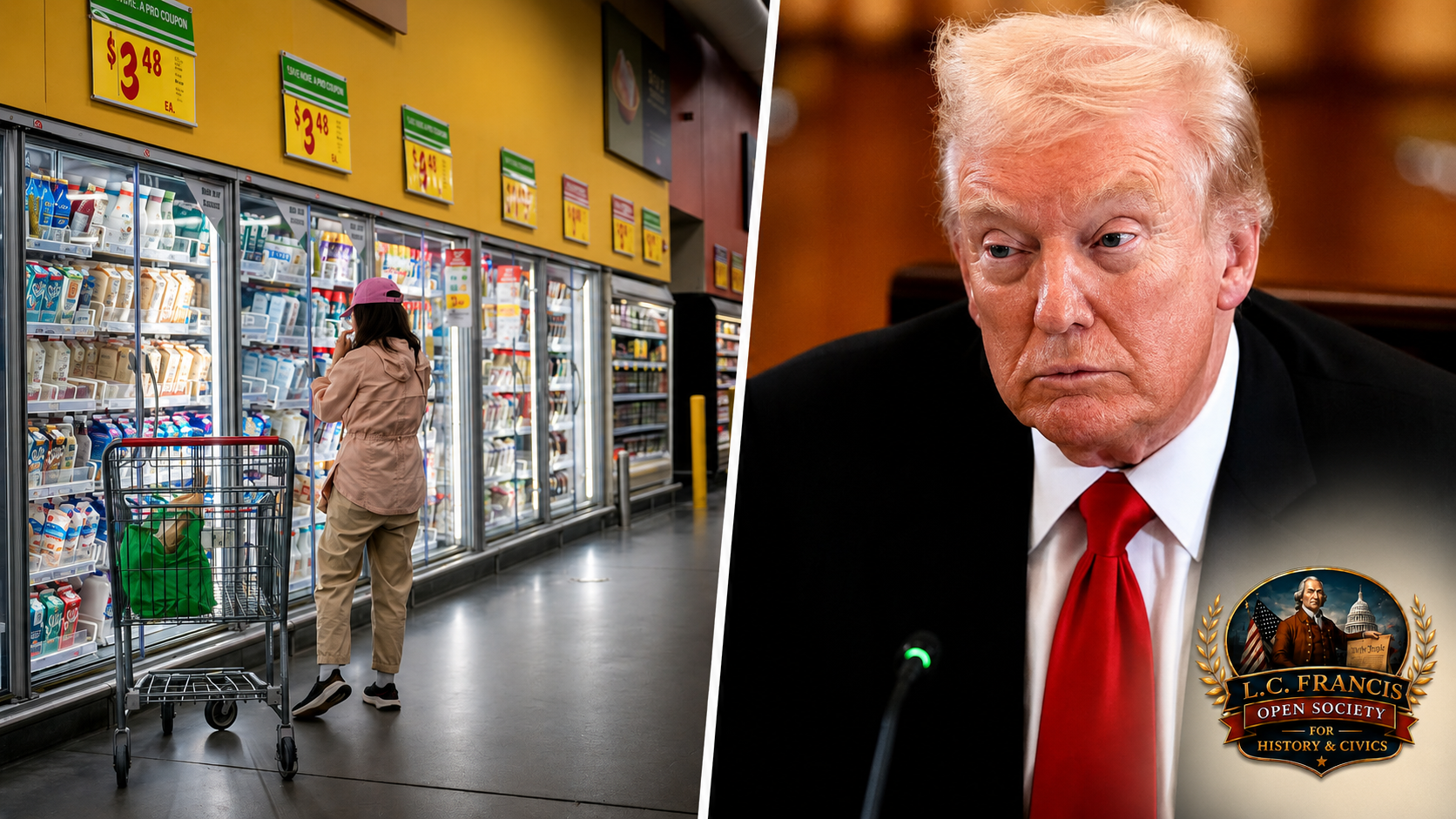
“Government is instituted for the common good; for the protection, safety, prosperity and happiness of the people; and not for the profit, honor, or private interest of any one man, family, or class of men.” Dear Friends, For many families across our country, Monday morning usually starts with simple arithmetic. A parent usually reviews the bank balance, packs the remaining food into a school lunch, and stops by to buy milk, bread, eggs, and enough groceries to last until payday. At the register, the total exceeds the remaining account balance. The screen suggests an option: take the groceries home now and split the payment into four installments. Dinner is served, but part of the next paycheck has already been spent. That small decision at the checkout would have sparked a major debate in a different Congress. Exactly fifty-six years ago today, on July 20, 1970, lawmakers strengthened the bipartisan National Commission on Consumer Finance, granting it authority to investigate lenders, summon testimonies, subpoena records, and recommend stronger federal protections. In essence, Congress aimed to determine if ordinary families could access credit on fair terms and if the government was sufficiently protecting them from abuse. The responsibility was not solely on borrowers; Washington was prepared to scrutinize the system that wielded greater power. There was a time in our country when consumer protection was seen as a government responsibility rather than a barrier to corporate profits. In just four years, Congress took steps to ban lending discrimination and made it mandatory for creditors to check for billing errors instead of just demanding payment. Today, credit isn’t something a bank officer presents or buried within a long store contract. Instead, it appears right alongside the grocery bill, divided into four manageable payments…often at a time when a parent is worried about feeding the family and has little choice to opt out. This is, unfortunately, America’s affordability crisis as seen in the ordinary American kitchen. In 2024, 18.3 million households struggle to afford enough food, including 6.7 million with children. In 318,000 of these households, children experienced hunger, skipped meals, or went entire days without eating because of a lack of money. The lending industry looked at those empty cupboards and found customers. 16% of adults used Buy Now, Pay Later in 2025, and 1 in 5 used it for groceries or food delivery. Among those financing food, 45% said it was the only way they could afford the purchase. 26% paid late, and 11 percent had an installment trigger an overdraft or an insufficient funds fee. These loans primarily target individuals already at high financial risk. For example, in 2021 and 2022, deep-subprime credit borrowers accounted for 45% of Buy Now, Pay Later originations, with an additional 16% from subprime borrowers. Almost two-thirds of the loans were issued to those with the weakest credit profiles. Automatic repayment helps keep default rates low because the lender is paid first, leaving the borrower with rent, utilities, and food. Over the past few years, we have seen a market explosion. Five major lenders issued 16.8 million loans worth $2 billion in 2019. By 2021, they were issuing 180 million loans worth $24.2 billion. Hence, families could now borrow through several apps at once, with no single lender seeing the full amount they owed. Meanwhile, the companies were collecting detailed information about what people bought, when they bought it, and how close they were to running out of money. Washington recognized the risk and ultimately sided with the lenders. In May 2024, the Bureau extended the same credit-card protections to these loans, covering billing disputes and refunds. On May 6, 2025, the Trump regime announced it would deprioritize enforcement, and six days later, it revoked the rule entirely. The days between reveal the larger plan. On May 9, 2025, Donald J. Trump signed congressional resolutions that killed an overdraft rule and another rule that placed the largest payment apps under federal examination. The overdraft rule was expected to save consumers up to $5 billion annually, about $225 per affected household. The payment-app rule covered companies processing more than 13 billion transactions and over $1 trillion in annual volume. Congress used the Congressional Review Act to erase those protections. That matters because the law bars the Bureau from issuing substantially similar rules unless Congress authorizes it to do so. Lawmakers didn’t just postpone two safeguards; they effectively shut them off completely. At every stop, protection disappeared. The installment lender could draw on the account, and the technology platform escaped routine scrutiny. The bank had more flexibility to seize funds when the account was short…At the end of the day, the family responsible for groceries still owed every cent. For instance, Apple clearly exemplifies this situation. Its CEO, Tim Cook, personally donated $1 million to Trump’s inaugural fund. Previously, the Consumer Financial Protection Bureau ordered Apple and Goldman Sachs to pay more than $89 million for issues with the Apple Card, including mishandling disputes and making false interest-free offers. Apple paid a $25 million fine, but in September 2025, Trump’s acting director canceled the consent order and waived any claims of noncompliance. 25% Discount to Upgrade to Paid A donation alone does not prove that Apple “purchased” the favor, and we don’t need to claim that. Public records already indicate money going to the president, a consumer-protection order being dismissed months later, and the government waiving potential violations by one of the world’s wealthiest companies. In fact, Apple was not an isolated reprieve. The Bureau’s own report says it closed about 40 percent of its pending investigations, dismissed or withdrew 19 public enforcement actions, and terminated or modified 22 orders in 2025. In other words, the agency Congress created after the 2008 financial collapse to protect Americans from abusive lenders was dismantling more cases than it completed. I often hear from Open Society members: “L.C., what can I do?” We can start by reminding Congress of what it once understood. Fifty-six years ago today, lawmakers gave a bipartisan commission the task of scrutinizing lenders, subpoenaing documents, compelling testimony, and assessing whether the credit system was fair to ordinary families. Congress did not blame struggling borrowers for their lack of influence; instead, it called upon the institutions that held that power. Therefore, the Senate Banking Committee and the House Financial Services Committee should do the same now. Put Buy Now, Pay Later executives, payment platforms, banks, and Consumer Financial Protection Bureau officials under oath. Demand records showing how much food Americans are buying on credit, how often automatic withdrawals trigger overdrafts, how many borrowers carry multiple installment loans at once, and how much revenue is extracted from families already unable to afford groceries. The House and Senate Agriculture Committees need to reveal the hidden hunger caused by these loans, particularly the children whose access to food is obscured by debt-financed groceries. They need to evaluate how much borrowing conceals food insecurity, safeguard nutrition programs and school meals from additional reductions, and ensure federal benefits align with the real cost of feeding a family. In a nutshell, a pantry filled with credit purchases doesn’t indicate hunger is gone; it merely postpones the problem to the next paycheck. Our message to every elected official must be unmistakable: restore the Consumer Financial Protection Bureau’s authority, restore the protections that were stripped away, and require every member of Congress to vote publicly. No more hiding behind committee procedures, deregulation slogans, or speeches about personal responsibility. Make them choose, on the record, between American families borrowing to feed their children and corporations collecting fees from the same empty accounts. The parent standing at the checkout counter isn’t responsible for creating this system. It was developed by financial companies, brought into grocery stores by technology firms, and the occupant of our Oval Office played an integral part in loosening the restrictions. Back in 1970, Congress wondered if the credit system truly helped American families. Now, we can clearly see the impact on the checkout screen, making it part of everyday life in Trump’s economy. A government that lets children go hungry while tech oligarchs turn their suffering into profit has not merely failed American families…It has auctioned off the dinner table, converted hunger into quarterly earnings, and allowed corporate boards to reward shareholders with dividends extracted from ordinary parents struggling to feed their children. Vivat Constitution! If this resonates with you, please share it with others and kindly consider a free or paid subscription. All my work is free to everyone & the Open Society relies on reader support. Our paid members help fund independent research, keep paywalls down, and maintain this as a civic resource for students, community organizers, seniors, and anyone seeking clarity in public life. |
L.C. Francis Open Society for History & Civics
Author and historian connecting America’s past to the forces shaping our Republic today. Evidence-driven essays on history, civics, democracy, and public life for readers who believe understanding the past is essential to protecting the future.
“A fondness for power is implanted in most men, and it is natural to abuse it when acquired.”— Alexander Hamilton, The Farmer Refuted, 1775 Dear Friends, I rarely republish an essay, but last night I revisited something I wrote on December 21, 2025, when Donald J. Trump first tried to graft his name onto the John F. Kennedy Center for the Performing Arts. I called it “Names Matter: Trump’s Hostile Takeover.” At the time, I argued that this was about far more than letters on a building. It was...
This is a test of the new Open Society sending address.
“The aim of every political constitution is, or ought to be, first to obtain for rulers men who possess most wisdom to discern, and most virtue to pursue, the common good of the society.”— James Madison, Federalist No. 57 Dear Friends, Over the years, I’ve learned to enjoy not just reading about the Sons of Liberty and the 18th-century Founders; I often explore the lives of more recent presidents as well. I’m mainly interested not only in their major achievements upon reaching the White House...